

I recently had the opportunity to tour the Walla Walla Foundry. I had been hoping to visit this place for some time, and I was excited when the opportunity arose. My visit did not disappoint. Mark Anderson, President, devoted a couple hours to the group of us from
WSU, generously spending his time to help us understand what takes place at the foundry. From my limited experience working through the casting process, I can appreciate the great deal of time, skill, and problem solving that goes into creating these sculptures.
The facilities were impressive, as were the individuals on hand to keep the place running. It is a fascinating place from an operations standpoint, as well as from the viewpoint of an artist. Internationally recognized and well established artists work with and depend upon the expertise at the foundry in order to realize their projects.
I've come away from this experience with some ideas in mind of how I might apply new techniques to my own working process. The equipment and buildings in this industrial setting were inspiring to me in themselves. A visit to the foundry was a great glimpse into the art world and the working process behind creating sculptures. They make use of some advanced forms of technology, facilitating the process of creating complex and large scale forms. It gives me much to consider, especially as I think about the scale of my own work.


 In terms of building crates for works of art, there are some scale concerns that come to the forefront when the object is to be displayed with this container. The wood itself is "life-size," a 1 to 1 ratio to reality. The object itself may be a different scale, however. In my case, my sculptures are generally smaller than life size. This issue of a sculpture, sitting on a pallet or other wooden structure, in relation to this other object is something I'm still trying to figure out.


 I recently had the opportunity to tour the Walla Walla Foundry. I had been hoping to visit this place for some time, and I was excited when the opportunity arose. My visit did not disappoint. Mark Anderson, President, devoted a couple hours to the group of us from WSU, generously spending his time to help us understand what takes place at the foundry. From my limited experience working through the casting process, I can appreciate the great deal of time, skill, and problem solving that goes into creating these sculptures.


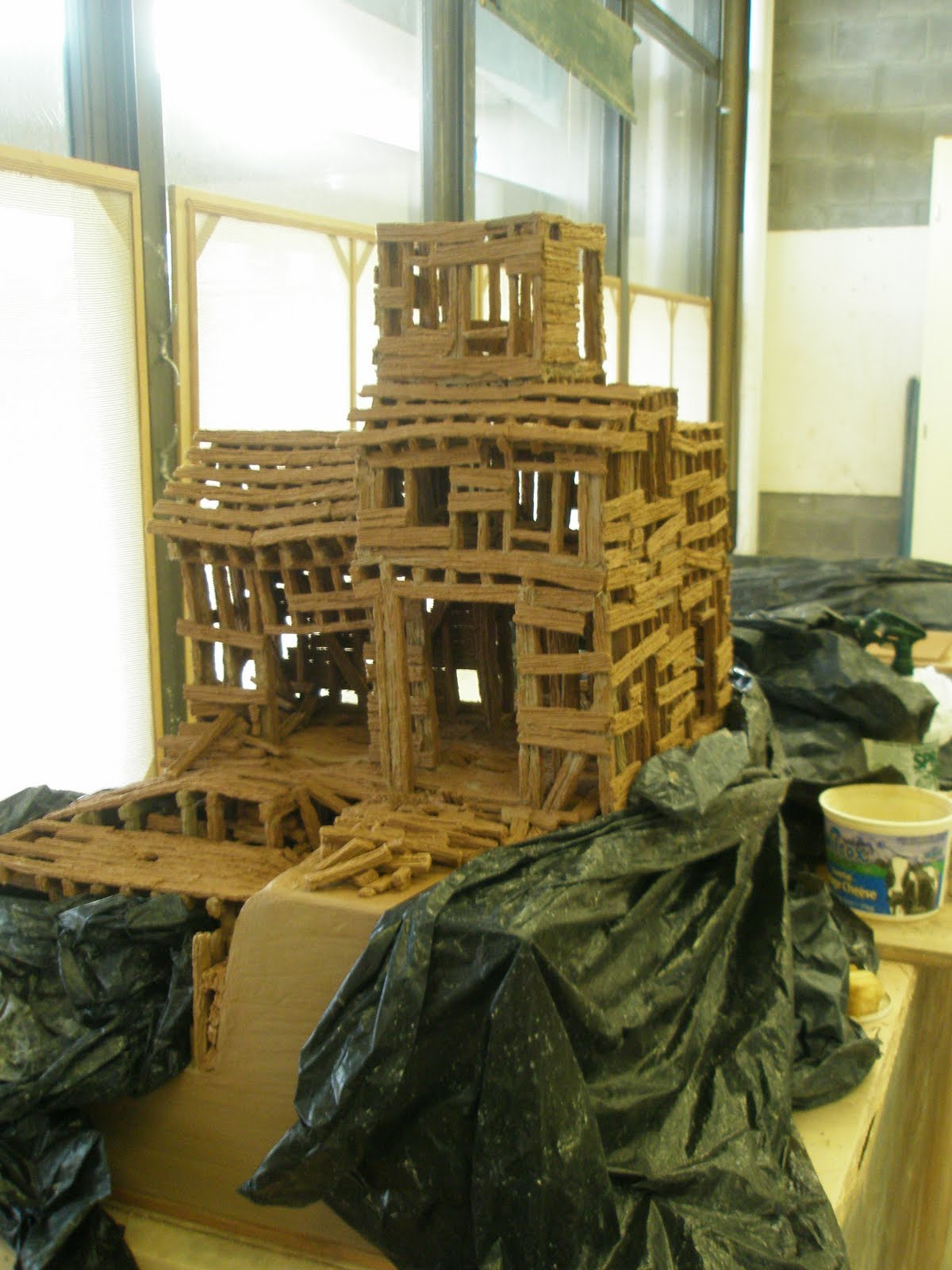 Right now in my work I'm seeking to expand my subject matter. It has been a couple years since I've explored some of these subjects in clay, so I felt it is time to revisit and push some of these ideas forward. This new series will involve rustic, abandoned buildings such as warehouses and barns. Some may be in various life stages, from more modern all the way to the scrap stage. Color choice is also an important consideration in addition to the form. These are structures which I envision, and I often look at reference images for inspiration. More of a matte, earth tone finish will be applied to this piece and likely all in this series.


