

There is an aesthetic of a wooden crate which is appealing. Although sometimes associated directly with the past, they are still utilized regularly for transporting and storing large, heavy, and/or heavy pieces.
For me, they serve this purpose in my sculptural work as well as an extension of the piece itself. They also seem to me as a means to overcome the
pedestal. Although I have yet to work through all of these issues, there is the possibility of displaying pieces on top of these crates or in positions of being removed from such a container. Certain pieces may even be displayed within a crate, depending on the specific installation.
The crate pictured on the red hydraulic lift (at bottom) is one which I recently built. It sits 4 feet long, by about 2 feet wide and 2 feet tall. I've envisioned creating an environment in a gallery setting in which it is as if the viewer just walked into a shipping yard, warehouse, or other industrial seen. Although I very much approach my sculptures as objects, I'm interested in how they might interact together to create more of an installation. I've also gained a deeper respect and appreciation for the process not only of art making but also of transportation; I would like these aspects to be apparent in my work also. But again, most important, I'm drawn to this notion of environment or installation, moving beyond the object so as to give it a new identity.


 In terms of building crates for works of art, there are some scale concerns that come to the forefront when the object is to be displayed with this container. The wood itself is "life-size," a 1 to 1 ratio to reality. The object itself may be a different scale, however. In my case, my sculptures are generally smaller than life size. This issue of a sculpture, sitting on a pallet or other wooden structure, in relation to this other object is something I'm still trying to figure out.


 I recently had the opportunity to tour the Walla Walla Foundry. I had been hoping to visit this place for some time, and I was excited when the opportunity arose. My visit did not disappoint. Mark Anderson, President, devoted a couple hours to the group of us from WSU, generously spending his time to help us understand what takes place at the foundry. From my limited experience working through the casting process, I can appreciate the great deal of time, skill, and problem solving that goes into creating these sculptures.


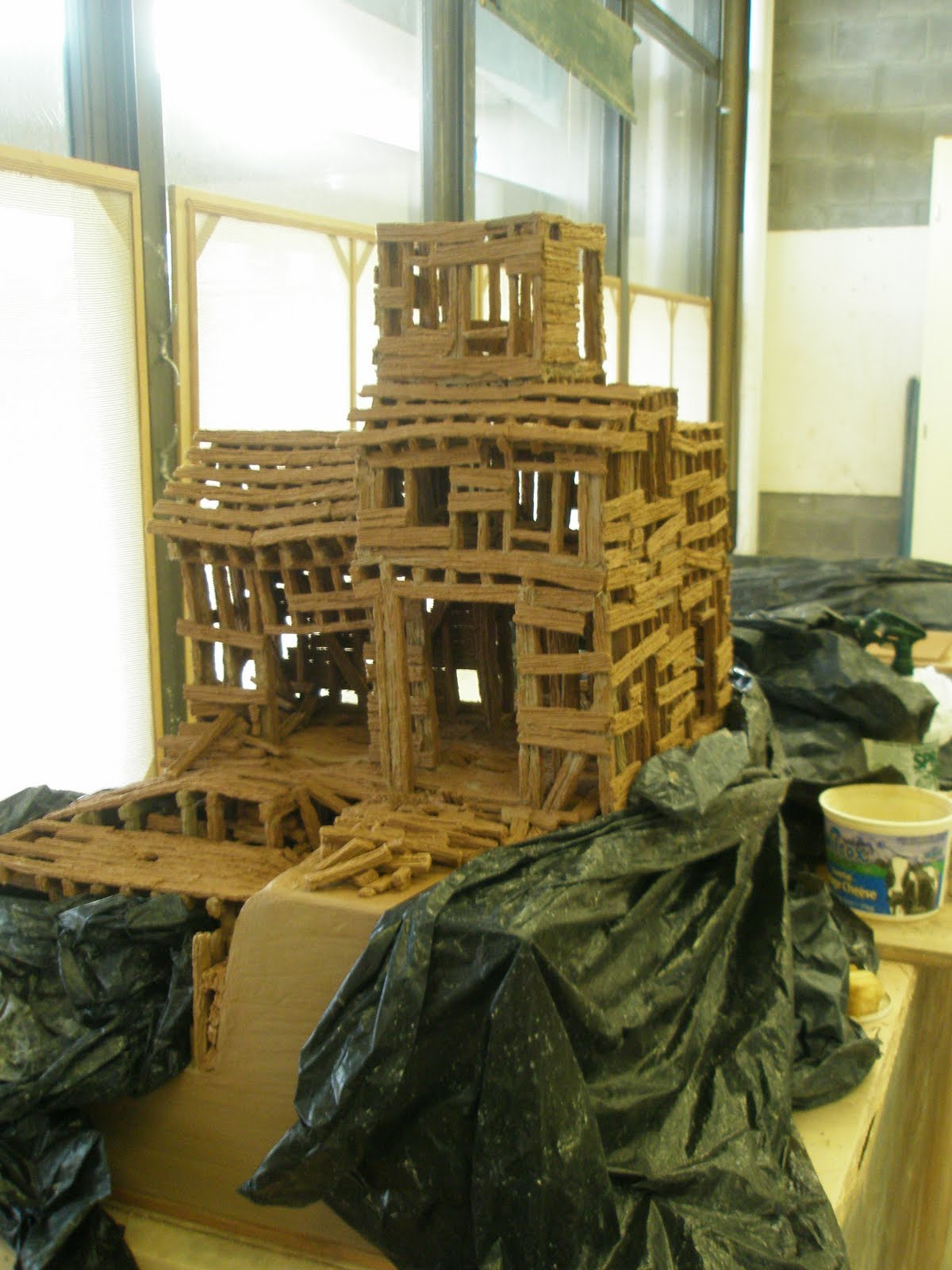 Right now in my work I'm seeking to expand my subject matter. It has been a couple years since I've explored some of these subjects in clay, so I felt it is time to revisit and push some of these ideas forward. This new series will involve rustic, abandoned buildings such as warehouses and barns. Some may be in various life stages, from more modern all the way to the scrap stage. Color choice is also an important consideration in addition to the form. These are structures which I envision, and I often look at reference images for inspiration. More of a matte, earth tone finish will be applied to this piece and likely all in this series.

 There is an aesthetic of a wooden crate which is appealing. Although sometimes associated directly with the past, they are still utilized regularly for transporting and storing large, heavy, and/or heavy pieces.


